

Children learn best when they are actively involved, curious, and having fun. At Edu Kids ELC, play is more than simply a way to keep children entertained. It is an important part of early childhood education that gives children opportunities to explore, experiment, communicate, move their bodies, solve problems, and develop confidence.
Through carefully planned indoor and outdoor experiences, educators can turn everyday play into meaningful learning opportunities. From riding and balancing to digging in the sandpit and creating imaginative games with friends, children can build skills that support their development in many different ways.
Here are 10 engaging play-based learning activities that demonstrate how children can learn through hands-on experiences.
1. Pedalling and Riding Adventures
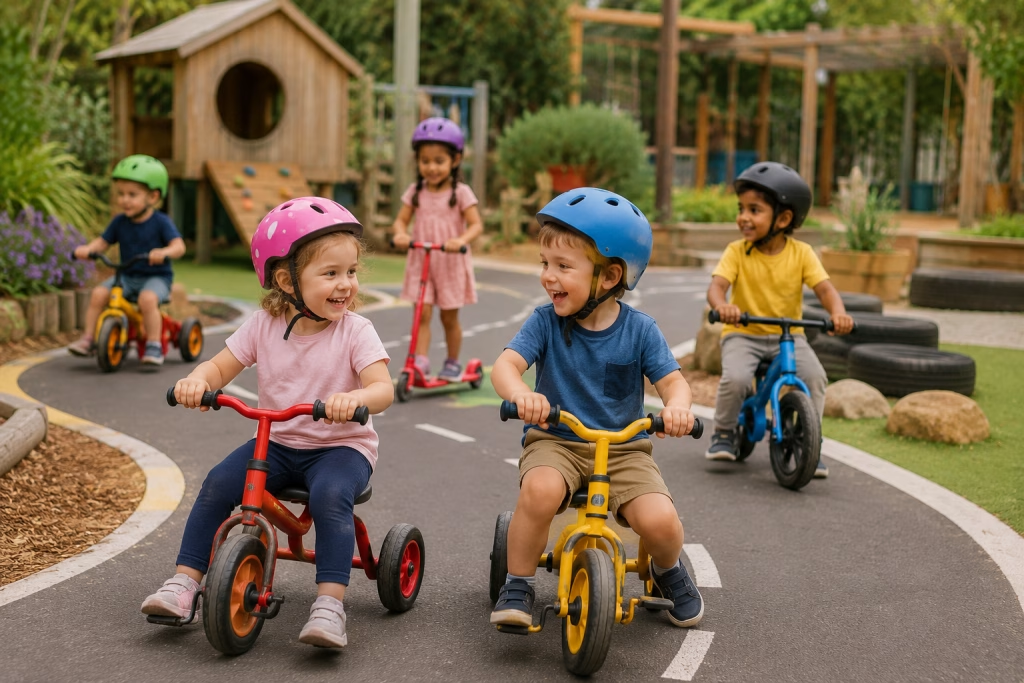
Riding tricycles and other wheeled equipment is an enjoyable way for young children to develop their physical abilities. As children pedal, steer, stop, and navigate around outdoor spaces, they practise coordination, balance, spatial awareness, and gross motor skills.
The activity also gives children an opportunity to make simple decisions. They may choose where to ride, work out how to move around an obstacle, or adjust their speed when approaching another child.
At Edu Kids ELC, outdoor movement experiences can encourage children to become more confident in using their bodies while enjoying active play.
2. Climbing and Balancing Challenges
Climbing, stepping, and balancing activities provide children with opportunities to test their physical abilities in a safe and supported environment.
Simple equipment such as stepping platforms, balance equipment, and low climbing structures can encourage children to think about where to place their feet, how to maintain their balance, and how to move from one position to another.
These experiences can support gross motor development, body awareness, coordination, and confidence. Children also learn persistence when they attempt a challenge several times before successfully completing it.
3. Exploring Outdoor Obstacles
Outdoor obstacle play can transform a simple play area into an exciting learning environment. Children can move around, over, and through different obstacles while following their own ideas or participating in educator-guided challenges.
For example, children may step across platforms, walk around markers, crawl through spaces, or carry objects from one area to another.
These experiences encourage problem-solving skills, movement planning, concentration, and physical confidence. They also allow children to discover that there can be different ways to complete the same challenge.
4. Tyre Play and Open-Ended Exploration
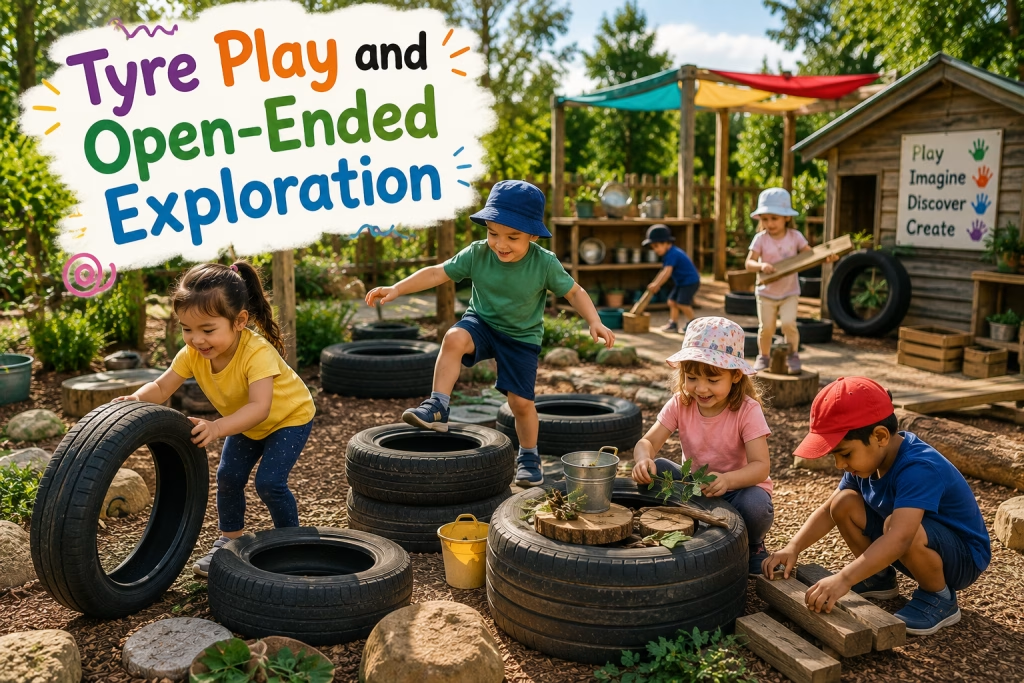
Everyday objects can become valuable learning resources when children are given opportunities for open-ended exploration. Tyres, for example, can be used in many different ways during outdoor play.
Children may push them, climb over them, move them around the yard, or incorporate them into imaginative games.
This type of open-ended play encourages creativity because there is no single correct way to use the resource. Children can develop their own ideas while practising movement, cooperation, and decision-making.
5. Digging and Scooping in the Sandpit
Sandpit play is a wonderful example of sensory and play-based learning. Children can dig, scoop, pour, fill containers, move sand, and experiment with different textures.
Using buckets, cups, spades, and other simple tools introduces children to early mathematical and scientific concepts. They can compare quantities, explore full and empty containers, notice changes in texture, and discover what happens when sand is moved from one place to another.
For young children, these simple experiences can support sensory development, hand-eye coordination, fine motor control, and early numeracy.
6. Building Sandcastles and Small-World Creations
Sand can become a blank canvas for children’s imaginations. Children may create sandcastles, roads, gardens, pretend food, houses, or entire small-world environments.
As they build, children experiment with shapes, sizes, textures, and structures. They may discover that wet sand holds its shape differently from dry sand or that certain structures need a wider base to remain standing.
This kind of creative learning allows children to explore early engineering concepts while developing imagination and persistence.
7. Sand Play with Friends
The sandpit can also become a valuable space for social learning. When several children play together, they learn to share resources, communicate ideas, take turns, and negotiate how they want to use the space.
One child might collect sand while another builds a structure. Another may suggest adding a road or creating a pretend shop.
These interactions help develop social-emotional skills, communication, cooperation, and respectful relationships. Educators can support this learning by encouraging children to listen to one another and work together on shared ideas.
8. Sensory Exploration Through Sand and Natural Materials
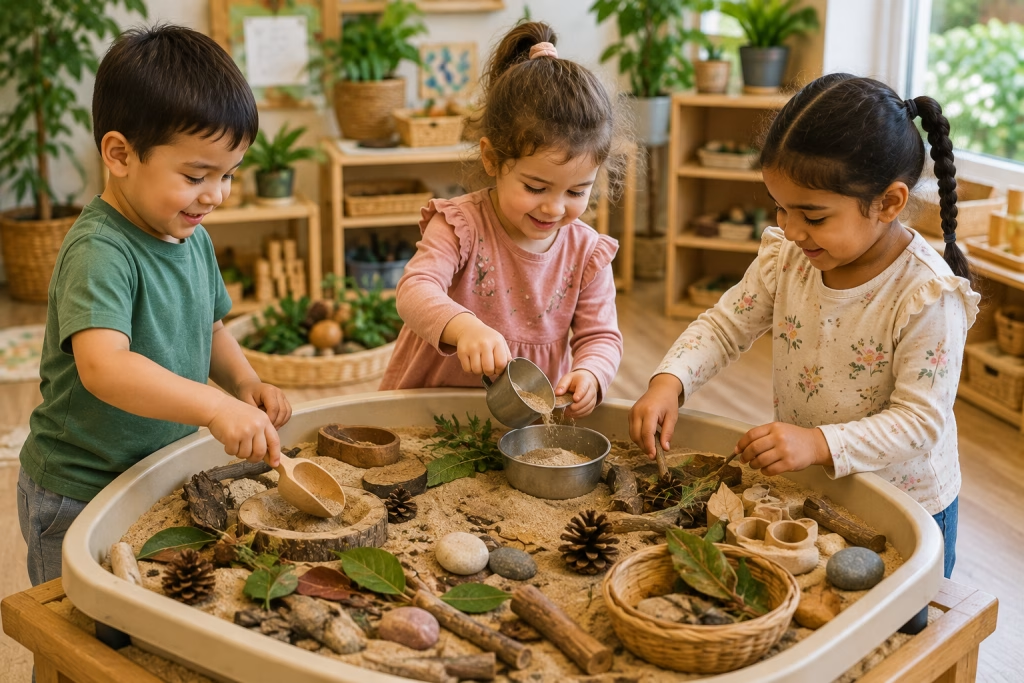
Sensory experiences allow children to investigate the world using touch, sight, sound, and movement.
During sand play, children can notice whether the sand feels dry, damp, soft, rough, warm, or cool. They can explore how it moves through their fingers or behaves when placed inside different containers.
Adding natural materials such as leaves, sticks, stones, or shells can further extend the experience and encourage children to observe differences in size, shape, texture, and appearance.
These experiences support sensory exploration while encouraging children to ask questions and make observations.
9. Imaginative Outdoor Play
Outdoor spaces can inspire some of the richest forms of pretend play. A sandpit can become a bakery, a garden, a construction site, or an imaginary landscape. A riding track can become a road for an adventure. Climbing equipment can become a mountain waiting to be explored.
Imaginative play helps children develop storytelling, communication, creativity, and flexible thinking. When children create their own scenarios, they are also learning to express ideas and understand different perspectives.
Educators can extend this experience by introducing open-ended questions such as, “What are you building?” or “Where does your road lead?”
10. Discovering, Moving and Learning Outdoors
Outdoor play brings many different learning opportunities together. Children can move their bodies, interact with friends, investigate natural materials, explore equipment, and make choices about their play.
For families considering a childcare centre Brookfield, understanding how outdoor experiences contribute to early learning can be an important part of choosing an early childhood setting.
A thoughtfully designed outdoor environment can support physical development while also encouraging curiosity, independence, communication, and creativity.
Why Play-Based Learning Matters
Play-based learning gives children the opportunity to learn in ways that feel natural and meaningful. Rather than simply receiving information, children actively participate in experiences, make choices, test ideas, and learn from their interactions with people and their environment.
At Edu Kids ELC, activities such as riding, climbing, balancing, sand play, sensory exploration, and imaginative games can contribute to a broad range of developmental outcomes.
Children can practise:
- Gross and fine motor skills
- Communication and language
- Social interaction
- Problem-solving
- Creativity and imagination
- Early mathematical thinking
- Confidence and independence
- Concentration and persistence
- Sensory awareness
- Cooperation and turn-taking
Creating Meaningful Learning Through Everyday Play
One of the most valuable aspects of play-based learning is that it does not always require complicated resources. A tyre, a bucket of sand, a tricycle, or a set of stepping blocks can provide children with countless opportunities to explore and learn.
The role of educators is to create safe environments, observe children’s interests, provide appropriate resources, and extend learning through thoughtful questions and interactions.
For parents exploring a kindergarten in Brookfield, looking at how children spend their day can provide useful insight into the learning experience. Opportunities for active play, creativity, social interaction, sensory exploration, and outdoor discovery can all contribute to children’s early development.
Learning Through Play at Edu Kids ELC
At Edu Kids ELC, play-based experiences can turn everyday moments into opportunities for discovery. Whether children are pedalling forward, balancing across equipment, digging in the sand, building alongside friends, or creating their own imaginative adventures, each experience can contribute to their growing skills and confidence.
Play is not simply something children do after learning. For young children, play is one of the ways they learn about themselves, other people, and the world around them.
By providing rich play opportunities and supportive interactions, early learning environments can help children develop the foundations they need for their next stages of learning.